Is China's 'Next Level' Tech Strategy Actually Fueling the Global Boom?
Sometimes the biggest market shifts happen when everyone is looking the other way. We often talk about the US-China competition in terms of raw power and trade wars, but when you dig into the mechanics—especially in hyper-sensitive areas like semiconductors—you find some truly surprising feedback loops. It turns out that China’s aggressive pursuit of tech self-sufficiency, which often looks like a series of "missteps" from the outside, is having a massive, almost gravitational pull on global supply. Let's unpack how Beijing’s push for indigenous tech is creating unexpected, intense demand elsewhere.
Here's the thing about the semiconductor market: it's incredibly tight. But what made the cup overflow, driving prices and indices of neighboring countries towards historic highs (such as EWY and EWJ), wasn't just organic demand; it was a counterintuitive reaction from China. When the U.S. restricted exports of high-end chips like those from Nvidia, China didn't just stop buying; they scrambled to replace the high-performance chips with domestically produced alternatives, primarily from companies like Huawei. What’s the surprising part? A single high-end Nvidia chip requires a certain amount of High Bandwidth Memory (HBM), but to achieve the same performance using less efficient Huawei chips, they often need three or four chips—which means they also need three or four times the amount of HBM. This multiplier effect created a massive, immediate surge in demand for critical memory components that China couldn't easily produce itself, ultimately tightening the global HBM supply chain and pushing prices up globally.
This leads us to a key insight: China’s "stumbles" in achieving immediate self-sufficiency in cutting-edge AI silicon actually accelerated the demand for the high-margin components produced by their competitors. From my experience watching these trade wars, this kind of induced scarcity is a game-changer. It means that until China truly perfects its substitutes (a timeline that remains uncertain), its efforts to localize chip production will continue to serve as an unexpected tailwind for global memory and packaging leaders. So, while we often focus on the trade restrictions, remember that the resulting change in China’s component consumption patterns is what truly flipped the market dynamics and dictated the pace of the rally .
Why Is Beijing Suddenly Letting Global Friends in the Door?
When we look at the geopolitical landscape, the narrative is usually one of sharp, increasing division, especially between the U.S. and China. But what's interesting is the sudden, almost contradictory, warmth China is showing toward key U.S. allies—specifically nations like the UK, Canada, and Germany . They are making frequent official visits, seemingly singing "China's tune," which on the surface looks like a definitive break from the U.S. orbit. However, here's the counterintuitive insight: these moves are less about deep, long-term alignment with Beijing and more about sending a very clear message to Washington.
The political visits and agreements serve primarily as a strategic tool against the unpredictability of figures like Trump and a way to gain leverage in negotiations with the U.S.. But what’s driving the immediate economic draw is pure self-interest. European economies, grappling with their own challenges, are prioritizing direct economic engagement—and China is the biggest buyer and investor capable of providing that immediate boost . For these countries, the need to secure sales for their own goods and attract direct investment simply outweighs the perceived long-term risk of defying the U.S. stance. I've found that when economic reality hits, especially in the face of a slowing global environment, short-term gain often beats long-term political solidarity.
This situation creates a dynamic where China benefits from the escalating tensions without having to lift a finger. While the U.S. and Europe bicker over fiscal policies and trade deficits, China quietly steps in to provide the needed market and capital, temporarily neutralizing the anti-Beijing rhetoric from Washington. The surprising fact here is that even though the U.S. is economically powerful, its current high levels of fiscal and trade deficits make it appear less capable of providing immediate economic relief to its allies than China, which is leveraging its massive purchasing power to win friends and influence nations at a critical time. This tactical openness by China is a masterclass in exploiting geopolitical friction for short-term economic gain.
Will Stimulus, IPOs, and Robots Finally Unlock China's Massive Savings?
Let's switch gears and talk about money—specifically the colossal amount of cash currently sitting dormant in Chinese bank accounts. You might have heard about China’s high saving rate, but here’s the unbelievable data point: even after global quantitative easing, China's total savings held in deposits are equivalent to roughly 37% of its GDP ! While global savings rates have fluctuated, China’s remains stubbornly high, recently sitting around 38%, which is still higher than any other major economy . The government knows that until this money moves from bank accounts into consumption or productive investment, true domestic economic revival—the critical goal for the next five years—remains impossible.
So, how do you get people to spend when they've been burned by real estate and a four-year slump in the stock market ? The strategy has two prongs. The first is direct cash infusion and targeted stimulus aimed at the vast base of lower-income citizens, specifically those below the 700 million-person threshold who often feel left behind by the wealth concentration at the top . The second, more crucial strategy is channeling those massive savings into the stock market by promoting IPOs of high-tech "strategic emerging industries," particularly in AI, AI chips, and robotics . This is designed to create wealth effects, which in turn encourage consumption. It’s a deliberate pivot: shifting capital away from failed real estate speculation toward future-proof industries through a buoyant stock market.
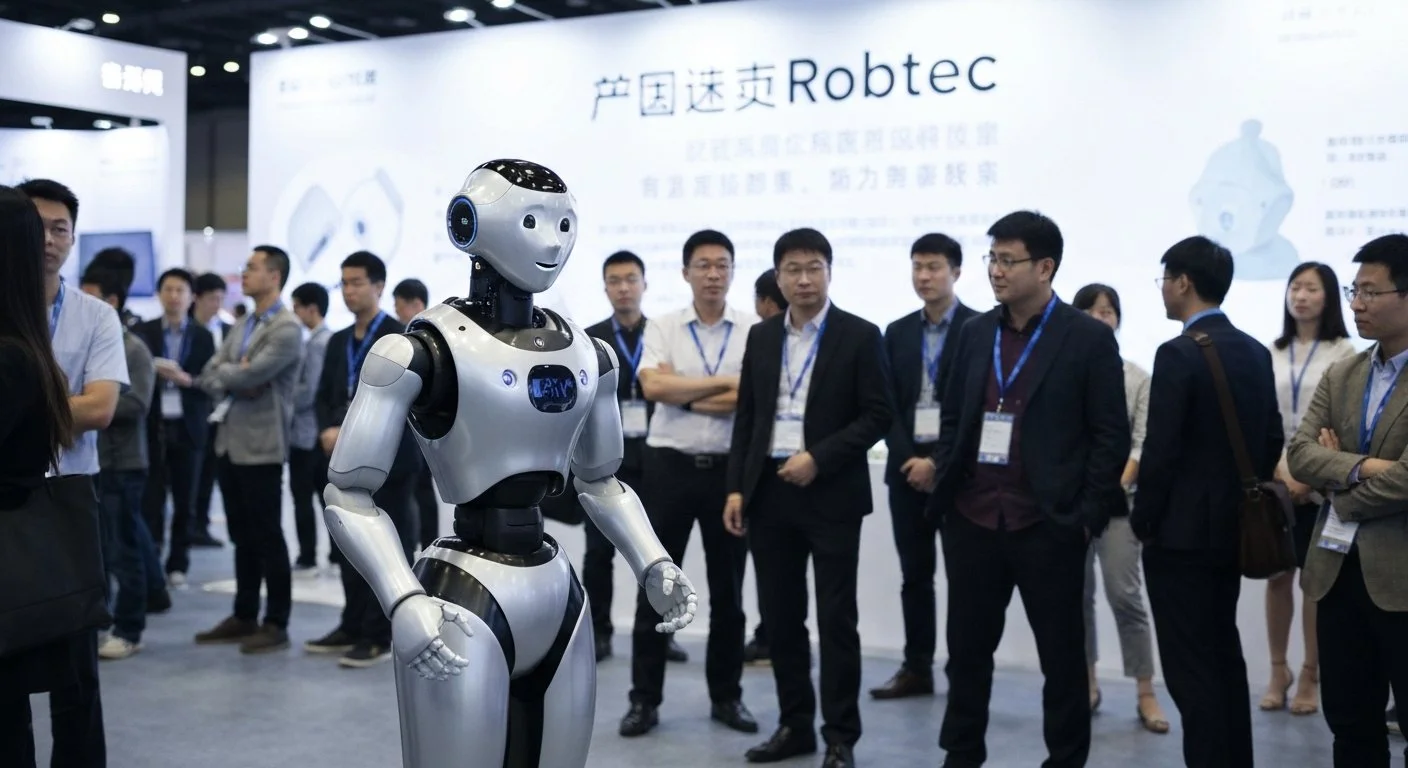
This brings us to a surprisingly hot sector: Chinese tech stocks. While U.S. markets have focused on the Magnificent Seven, China’s own "M7" (including giants like Xiaomi, which is now a major EV player, and SMIC) saw an average gain of 47.4% last year, outperforming the U.S. M7’s 38.7% average return . The difference? Unlike some of their American counterparts struggling with massive capital expenditures (CapEx) on AI, the Chinese M7 are often backed by strong cash flow from traditional sectors, stabilizing their balance sheets . This stability, coupled with strategic planning (like assigning specific companies to lead certain AI fields—Baidu for autonomous driving, Ping An for finance AI) has prevented the kind of wasteful "resource scatter" seen in fully liberalized markets . Finally, keep an eye on robotics: China is already dominating the global robot parts supply chain (providing 57% of global components) and is pushing companies to rapidly commercialize humanoid robots, even those that "fall down," to test and iterate quickly, a method that contrasts sharply with the perfectionist approach often seen in the West . This relentless push suggests that the long-dormant capital is now being mobilized to create the next generation of tech stars, giving investors a new focal point beyond traditional heavy industry.