Should You Ditch Stocks for Bonds? The Hard Truth About 5% Treasuries and 14% CoreWeave
Hey there, ever feel like the market is just playing a cruel joke on your portfolio? You're not alone. With AI stocks looking shaky, it's easy to eye those 5% U.S. Treasury yields or even the eye-popping 14% on some corporate bonds and think, "Maybe it's time to just pack up my stocks and head for the perceived safety of bonds." It’s a question I hear a lot these days, and honestly, it’s a valid one given the current climate. But before you hit that sell button, let's grab a coffee and really dig into what's going on.
The Shaky Ground Beneath Our Feet: Why Stocks Are Struggling
It feels like "AI stocks are plummeting" is the headline every other day, doesn't it? It's tough to watch, and it leaves many of us wondering what's truly driving this downturn. Want to point to a couple of intertwined issues that are really shaking things up. First, while corporate earnings expectations haven't drastically changed, the interest rates used to value those earnings have become incredibly volatile. This creates a conflict that's impacting everything from supply and demand to overall market sentiment.
Think about it this way: for a long time, semiconductor stocks, fueled by the AI boom, were the darlings of the market. The narrative was simple – AI investment would grow, and so would chipmakers' profits. But when long-term U.S. Treasury yields climb to high levels, the present value of those future profits shrinks. Suddenly, investors start questioning whether the massive investments AI companies are making will actually pay off. This doubt puts significant pressure on stock prices, creating a challenging environment for even the most promising sectors.
It's not just about future profits, though. Companies, especially the big tech "hyperscalers," have increasingly relied on external borrowing, like issuing bonds, to fund their ambitious projects. When interest rates rise, the cost of that borrowing goes up significantly. A company that could comfortably generate a 3% return when borrowing at 3% might struggle to hit a 5% or 6% return when their borrowing costs are that high. This increased cost of capital makes investors wary, leading to a re-evaluation of even strong companies. Investors, for instance, aren't necessarily doubting the competitiveness of companies. Instead, they're adjusting their global portfolios, reducing their exposure to AI-related investments, and often selling off highly liquid, large-cap stocks in markets. It's a portfolio adjustment, not a fundamental questioning of the companies themselves, but the impact on stock prices is very real.
The CoreWeave Conundrum: High Yields, Higher Risks
Speaking of high borrowing costs, let's talk about CoreWeave. This company, which essentially buys AI chips and leases them to big tech firms, recently made headlines for its credit default swap (CDS) spreads widening significantly. This isn't just market chatter; it's a signal that the market is getting nervous. CoreWeave's corporate bonds were offering yields upwards of 10%, even 14-15% – practically "junk bond" territory. It's incredibly attractive on the surface, right? Imagine getting 14% on your money!
But here's the catch: that high yield comes with significant strings attached. If you buy a two-year CoreWeave bond yielding 14%, you're essentially betting that the company won't default within those two years, and that any price loss on the bond won't exceed the 28% (14% x 2 years) you'd earn in interest. It's a high-stakes gamble. CoreWeave's business model involves significant upfront investment in GPUs, with revenue coming in later from leasing. If there's a mismatch between when they need to replace equipment or repay debt and when they receive cash from clients, they could face serious liquidity issues.
This situation highlights a crucial difference between stock and bond investors. Stock investors are often focused on future growth and potential profits. Bond investors, however, are far more conservative. Their primary concern is getting their principal back and receiving regular interest payments. They scrutinize a company's ability to survive and pay its debts, not just its growth prospects. So, while CoreWeave might have long-term contracts and even receive payments upfront, bond investors are looking at the underlying business structure and asking, "What if something goes wrong?" The widening CDS spreads reflect this market anxiety, signaling potential difficulties in liquidity or trust, rather than an outright prediction of bankruptcy.
The Illusion of Safety: Why U.S. Treasuries Aren't a Sure Bet (Yet)
So, if stocks are volatile and high-yield corporate bonds are risky, surely U.S. Treasuries, with their 5% yields, are the safe haven we've been looking for? It's a common thought, and indeed, many individual investors have been flocking to shorter-term U.S. Treasury ETFs and bonds. The absolute yield is certainly appealing. However, Kim Myung-sil offers a sobering perspective: it's not yet the time to indiscriminately sell all your stocks and pile into U.S. Treasuries.
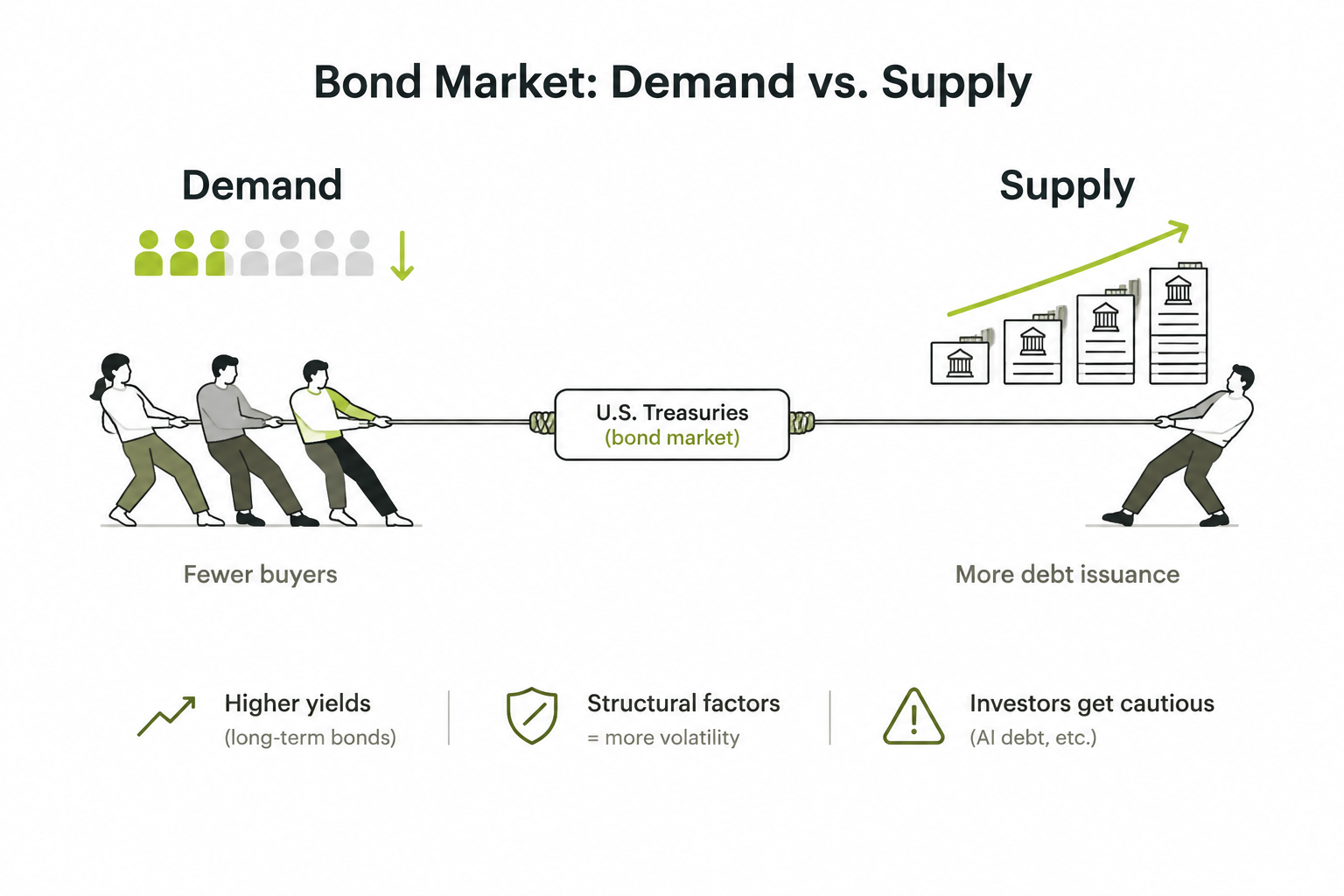
Why? Because the reasons behind the rising U.S. Treasury yields are deeply concerning. One of the most critical factors is a dramatic reduction in demand for U.S. government bonds. Historically, the Federal Reserve, along with major players like China and Japan, were massive buyers of U.S. debt, often without much regard for price. The Fed, in particular, would step in during crises with quantitative easing, effectively propping up bond prices and keeping yields low. But those days are largely over. The Fed is no longer a "mindless" buyer, and geopolitical shifts mean traditional foreign buyers are less enthusiastic.
This shift has led to a significant increase in what's called the "term premium." This premium reflects the compensation investors demand for holding longer-term bonds, accounting for risks like inflation, supply-demand imbalances, and fiscal uncertainty. For a long time, this term premium was actually negative, meaning investors were willing to accept less yield for the perceived safety of long-term U.S. debt. But since 2023, it's been steadily climbing, recently hitting a 10-year high. This tells us that investors are increasingly worried about the U.S. government's ability to manage its growing debt, especially with politicians promising more spending. While yields have dipped slightly recently due to a flight to safety amid European fiscal concerns, the underlying structural issues—like the U.S. government's ever-increasing debt issuance and the lack of a clear plan to address it—remain unresolved.
Navigating the Bond Market: Short-Term vs. Long-Term
Given this complex landscape, what's an investor to do? While long-term U.S. Treasuries remain unstable due to these structural issues, shorter to medium-term bonds (under five years) might offer a more attractive opportunity. The yields on these shorter-term bonds have risen quickly due to expectations of Fed rate hikes. For instance, a two-year Treasury might yield around 4.7-4.8% when the 10-year is at 5.1%.
The advantage of these shorter-term bonds is that even if interest rates rise by another 30-40 basis points, the higher coupon payments can often offset any price depreciation. This creates a more favorable risk-reward profile compared to long-term bonds, where price sensitivity to interest rate changes is much higher. So, it's not about abandoning stocks entirely, but rather about strategically diversifying your portfolio. If you're looking to allocate some capital to safer assets, focusing on short to medium-term bonds could be a more rational approach than jumping into long-term Treasuries.
Ultimately, the decision to invest in bonds, and which type, comes down to your individual risk tolerance and financial goals. While U.S. Treasuries are generally safer than corporate bonds, even they carry risks, as evidenced by the rising term premium. Corporate bonds, especially those with high yields, come with the very real possibility of default, meaning you might not get your principal back. It's crucial to understand these risks and not just be swayed by attractive headline yields. The market is complex, and a thoughtful, diversified approach is always the best strategy.