Jensen Huang's Bombshell: Why NVIDIA's Dive into "Virtual Cells" is Terrifyingly Brilliant
You know, for the longest time, the AI world operated on a pretty simple principle: throw more data at it, plug in more GPUs, and AI gets smarter. From the massive cloud infrastructures to the latest generative AI models, this belief fueled trillions of dollars in computing investments. But what if I told you that this scaling law, this fundamental assumption, is starting to crack? And what if I told you that NVIDIA, the company synonymous with AI chips, is not just aware of this crack but is actively exploiting it to dominate the next frontier?
Recently, a global competition brought together over 5,000 researchers from 114 countries and 1,200 teams, including top scientists from global pharmaceutical companies and Silicon Valley AI engineers. They battled for six months, and guess who won? Not the big tech giants with their endless resources, but a small bio-AI startup. This outcome, however, is just a small piece of NVIDIA's much larger, and frankly, chilling, strategy.
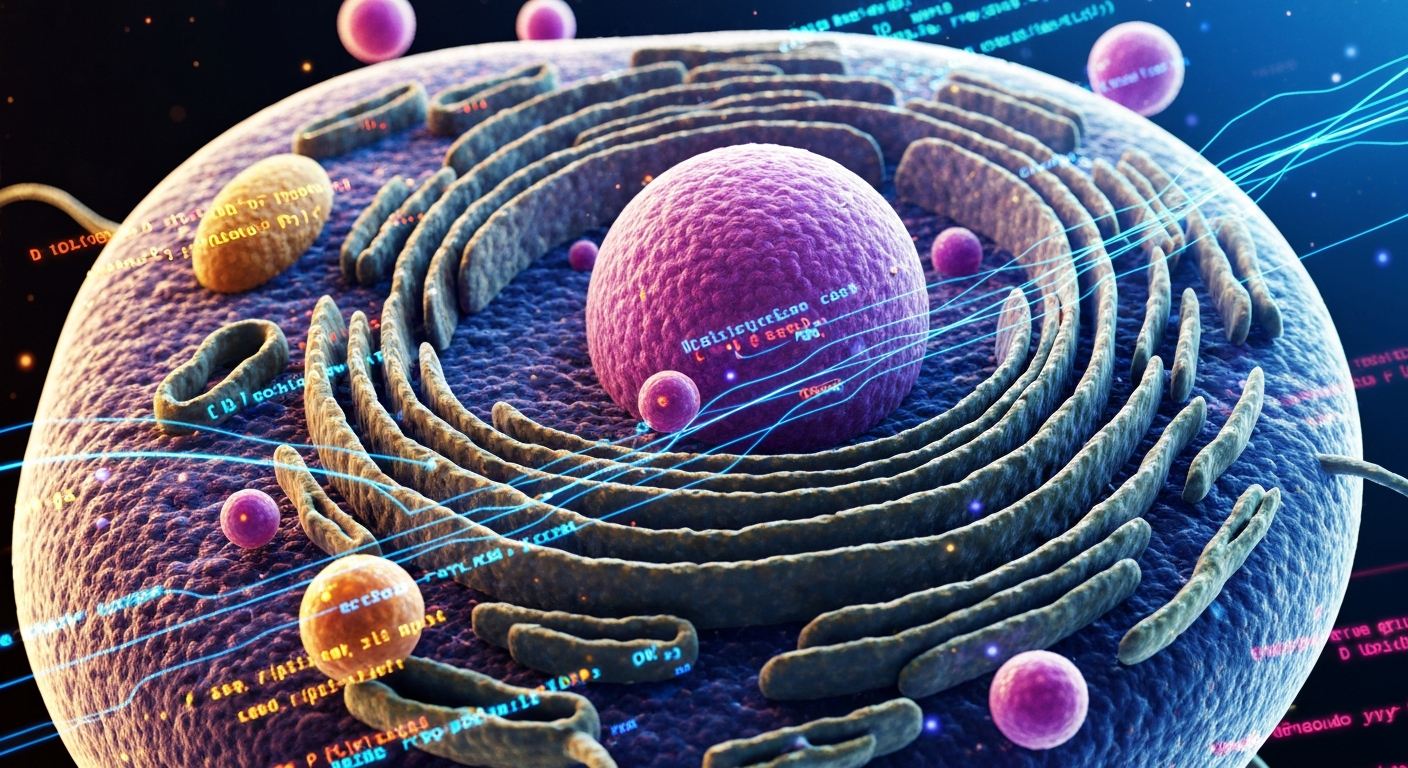
The Next Frontier: Beyond LLMs and into Biology
NVIDIA, with a market cap roughly three times South Korea's GDP, isn't just an AI chip company anymore. If you still think of them that way, you're missing the bigger picture of why other tech giants can't seem to catch up. NVIDIA is actively creating its next market, and it's not just about selling more GPUs for large language models (LLMs). While LLMs like ChatGPT and Gemini certainly consume a lot of GPUs, the market for them is, to some extent, already defined. To truly skyrocket their revenue, NVIDIA needs to find the next insatiable consumer of computing power.
Enter drug discovery. Developing a single new drug currently takes an average of 10 years and billions in funding, with a staggering 90% failure rate in clinical trials. It's the epitome of inefficiency. But imagine if computers could solve this problem. The entire pharmaceutical industry would be turned on its head. We've seen glimpses of this potential with AlphaFold, which won a Nobel Prize for predicting the shape of a single protein. That was a relatively "easy" puzzle. But a single human cell contains billions of proteins, constantly interacting in a dynamic, ever-changing system. Genes switch on and off, cells react to external stimuli, and metabolic byproducts all intertwine in a dance of unimaginable complexity. Predicting a cell's behavior makes predicting a single protein look like child's play.
The Virtual Cell Challenge: NVIDIA's Masterstroke
This is where NVIDIA's "Virtual Cell Challenge" comes in. From June to November 2025, in partnership with the Arc Institute, NVIDIA is hosting a competition to see if living cells can be entirely replicated within a computer. Why would a GPU company host such a contest? Because they need the next market to sell even more GPUs. Jensen Huang himself has declared, "Biotechnology is the next-generation semiconductor." At last year's PMWC conference, he even stated that it would be one of the greatest revolutions in human history.
The truly terrifying part of NVIDIA's strategy lies in the details of this challenge. They brought in top sponsors like XS Genomics (a leader in single-cell analysis) and Ultima Genomics (a low-cost genome sequencing company), with the non-profit Arc Institute as the host to lend credibility. The prize money, however, is surprisingly small: $100,000 for first place and $50,000 for second. Yet, researchers commanding multi-million dollar salaries flocked to participate. Why? Because it's not about the immediate cash. It's about the opportunity to be recognized as a leader in the "next AlphaFold," in a field where no clear winner has yet emerged. Unlike LLMs, which are already dominated by giants like OpenAI and Google, the virtual cell space is a blank slate, an unclaimed territory.
The Unexpected Outcome and NVIDIA's True Victory
Everyone expected the big tech companies and well-funded research institutions to win the Virtual Cell Challenge, given their access to capital and GPUs. The challenge itself was brutal: AI models had to predict how an unseen cell would react to specific genetic manipulations, proving they understood the biological causal relationships, not just superficial patterns. But when the results came in, Silicon Valley faced a cold reality: the big tech players didn't win. The scaling law – the belief that more data and more GPUs solve everything – failed here.
The first-place team, a small bio-AI startup called BMTVC, didn't just rely on deep learning. They created a hybrid model that combined deep learning with classical statistical methods. Even more shockingly, the third-place team, a collaboration between the University of Chicago, Dartmouth, and the University of Hong Kong, barely used deep learning at all, outperforming sophisticated deep learning models with simple classical statistical techniques developed in the 1940s! This revealed a crucial insight: current AI isn't yet capable of fully unraveling the complex causal relationships within genes. For now, the knowledge of biologists and traditional analytical methods are essential to fill AI's gaps. The Virtual Cell Challenge taught humanity a valuable lesson: don't rely solely on AI; cells are far more complex than we thought.
So, who truly won this competition? While the startups and research labs certainly gained recognition, the real victor was NVIDIA. Half of the prize money was awarded in DGX Cloud credits – essentially, usage rights for NVIDIA's supercomputers. This means that if the winning team, BioMap, wants to further develop their model, it will run on NVIDIA's cloud. And if thousands of researchers worldwide try to replicate the methods of the third-place team, that replication will also happen on NVIDIA's cloud. This is the core of NVIDIA's strategy: whether you win or imitate, you're competing on NVIDIA's platform. It's a familiar playbook, reminiscent of how NVIDIA used its CUDA software to lock computer scientists into its GPU ecosystem. Now, they're doing the same with biologists, chemists, and drug developers, effectively bringing domain experts into their cloud.
The Future is Biological, and NVIDIA is Building the Infrastructure
This reveals that already, two-thirds of research funding is being spent within the NVIDIA ecosystem. In data-driven bio research labs, GPU cloud usage fees are now the primary and most substantial bill. What used to be the biggest fixed costs in biological experiments – reagents, pipettes, cell culture media – have been replaced by GPU cloud usage. We've entered an era where cloud costs in a biology lab can exceed the cost of reagents.
The drug discovery market, as I mentioned, is a massive industry with a dismal success rate. If virtual cells become a reality, computers could pre-test millions of drug candidates for toxicity and reactions, drastically reducing the endless trial and error in labs. Filtering drug candidates without physical labs would completely reshape this colossal industry. While most people weren't paying attention, NVIDIA has been laying the groundwork for this revolution. No single company has yet established a technological moat in the field of replicating actual cell function within a computer.
Many of us missed the beginning of the LLM era. But if you've read this far, you're incredibly fortunate. You've just learned about an unclaimed territory, a field where no one yet dominates. Biological AI is just beginning, and while it's still early, one thing is clear: wherever it goes, it will have to pass through NVIDIA. As Demis Hassabis, Nobel laureate in Chemistry and CEO of Google DeepMind, said, "Biology is the most complex information processing system in the universe. AlphaFold is just the beginning, and our ultimate goal is to simulate entire living cells, and even entire organisms." The question isn't if this will happen, but when, and NVIDIA is positioning itself to be the indispensable infrastructure for this biological future.