Is the Next Fed Chair a Hawk or Just a Good Employee? Understanding the Market's Reaction
When news breaks about a potential new Federal Reserve Chair, like Kevin Warsh, everyone rushes to label them, right? We immediately want to know: is this person a hawk (pro-tightening) or a dove (pro-easing)? You know, the financial media loves to put people in neat little boxes, often highlighting Warsh's past record as "very hawkish" based on old meeting minutes . But here's the thing, from my experience watching how these things play out in the real world—especially in high-stakes environments like the Fed—interpreting someone’s philosophy in isolation misses a huge, crucial point: they are still an employee . Think about it: if your boss (in this case, maybe a President like Trump) hires you because they assume you share their vision, are you going to immediately start implementing a completely different philosophy just because it was your personal academic favorite? I haven't seen many people keep their job doing that.
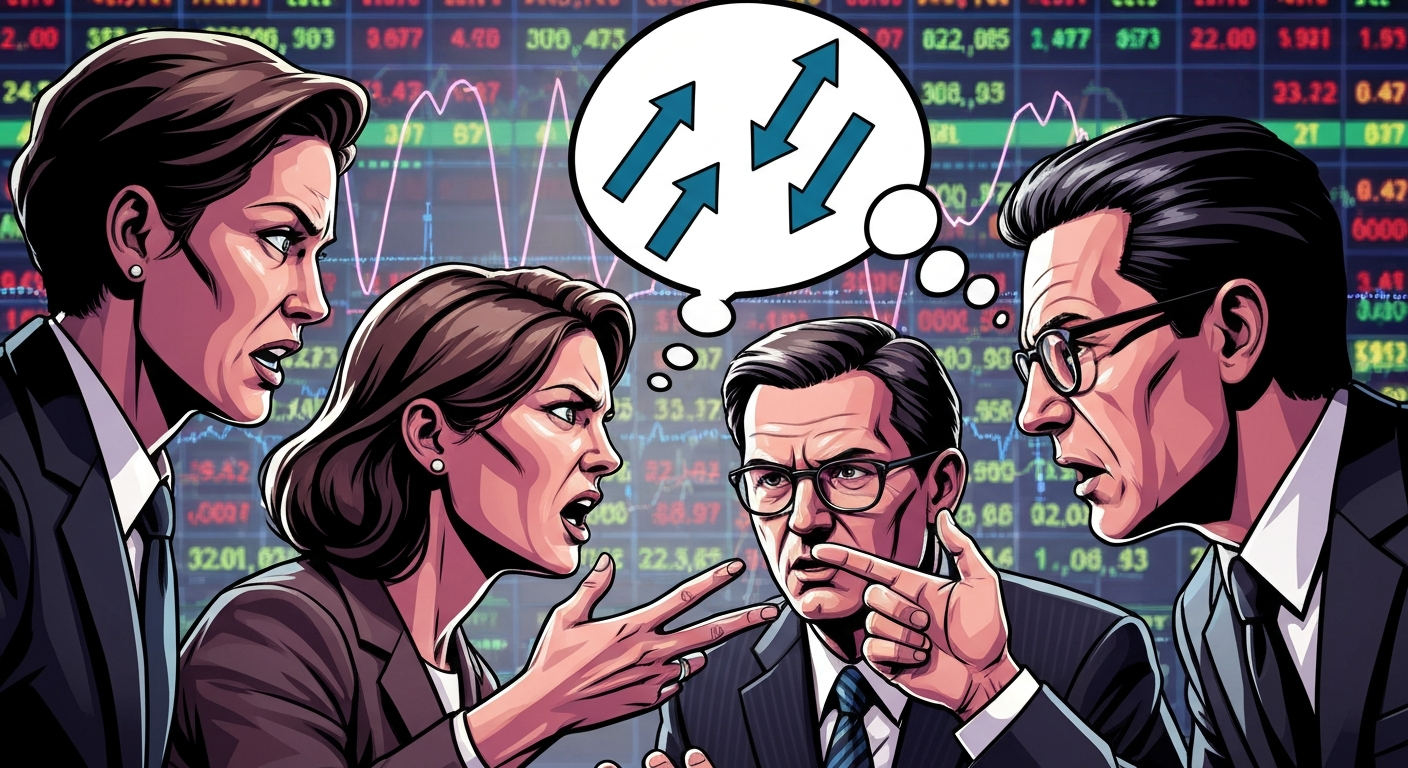
What's interesting is that an analyst might pore over every word Warsh ever said, noting his philosophical dislikes—like his deep aversion to quantitative easing (QE) and his belief that the Fed’s power is "excessive" . However, a politician like Trump shares a similar concern about the Fed's excessive power, though he focuses more on regulatory authority and less on the pure academic policy . This alignment, especially regarding the need to ease banking regulations—something both Warsh and Trump desire because it encourages banks to buy more Treasuries —suggests the incoming chair might prioritize regulatory changes favored by the administration over strict adherence to old hawkish monetary ideologies. Ultimately, the market is often looking for a scapegoat or a catalyst, and whether the new chair is Warsh (the perceived hawk) or someone like Kevin Hassett (the perceived dove, known to be close to Trump) , the initial market outcome was likely predetermined: turbulence.
The counterintuitive insight here is that the market's initial reaction, which was already on edge, would have been negative regardless of who was chosen . If Hassett, the dove, had been selected, the market would fear that his closeness to Trump would lead to aggressive rate cuts, unleashing inflation, causing long-term bond yields to spike, and hurting stock valuations . Conversely, with the "hawk" Warsh, the market simply sees a tightening signal and cries anyway . The market, like a person who has already decided they dislike someone, finds a reason to justify their negative feelings no matter what action is taken . Therefore, Warsh's real actions, particularly his shift in economic views post-Trump, which now include the belief that AI innovation will increase productivity and stabilize prices , are more important than his historical "hawk" label. The consensus pick of Warsh, pushed by strategic insiders like Bessent, was actually a move to prevent the more destabilizing long-term reaction that would have followed a Hassett appointment.
Has the Job Market Really Broken, or Is Everyone Just Blaming Immigration?
Let's dive into the employment data, because that's where the Fed spends most of its time, right? Recently, we saw a surprisingly low private payroll report from ADP—just 22,000 jobs . Now, most mainstream economists and the Fed itself look at this and say, "That's low, but the labor market isn't broken enough to warrant aggressive easing" . Their standard explanation, which you often see in economic textbooks, revolves around labor force growth: if non-farm payrolls match the influx of new workers (often immigrants), the unemployment rate remains stable, and policy can stay put—the so-called "Goldilocks" scenario . They argue that a crackdown on immigration has artificially reduced the number of job seekers, so naturally, job creation numbers are lower, but this doesn't indicate economic weakness.
Here is where I disagree with the prevailing view, and I think it's crucial to look deeper: why did immigration stop in the first place ? The common wisdom says, "Trump's policies made it impossible to cross the border," and that's why the labor supply dropped . But the surprising truth is that the primary reason immigrants aren't coming is simple economics: there are no jobs . You see, even under heavy enforcement (which happened during the Biden administration too), workers are willing to risk everything to cross the border if they know they can earn thousands of dollars a month . From my conversations with people on the ground, even Hispanic communities in the U.S. are reportedly advising family members back home to stay put, saying, "Don't come over; I'm having trouble finding a job myself and I’m already established here".
This leads us to a crucial structural difference: the economy being bad is the cause, not the effect, of the low job numbers . If companies aren't hiring because demand is weak, they aren't looking for workers, which means immigrants have no incentive to risk the journey . So, the low non-farm payroll number isn't an optical illusion caused by reduced immigration; it's a genuine indicator of deep economic softening . If this economic deterioration is the fundamental reality, it means the Fed's current 'wait-and-see' policy is misguided, and economic stimulus (buoying the economy) should be the next step, contrary to the typical textbook approach.
Why Are March and April the Most Important Months for the Market Forecast?
If we accept that the economy is weakening beneath the surface, the next big question is: when will this hit the Fed's radar and force a change in policy? Forget the election schedule and the usual political forecasting; I’ve found that the real action is dictated by a specific economic lag—the one-year effect of tariffs . Historically, major trade policy changes, particularly those involving tariffs, have a noticeable 12-month time lag before their negative effects fully ripple through the economy and impact inflation and growth . Since many significant tariffs were put in place around April of last year, the anniversary—which means the biggest impact—is coming up very soon: March and April .
What's fascinating is that while official government data (like the CPI, which tends to move sideways or slightly down) might lag, real-time private-sector inflation tracking services are already picking up on this deflationary pressure . Private firms that use big data to mechanically track all online market prices (like rent, transaction prices, etc.) on a daily basis—think services like Truflation—are showing that the rate of inflation has been dropping sharply since February . This suggests that the year-long tariff effect is now manifesting as a deep deflationary pressure, which is exactly the kind of fundamental shift that will force the Federal Reserve to change its current stance .
This potential attitude shift by the central bank toward a more dovish stance, driven by weakening economic fundamentals rather than political pressure , could suddenly change everything. If the Fed leans dovish, the U.S. dollar is likely to weaken, leading to stability in currency exchange rates. For places like Japan and South Korea, whose interest rates were pressured higher by a shaky exchange rate, that stability could lead to falling domestic interest rates . Plus, if the U.S. market realizes the inflation they feared was actually being offset by this tariff-induced deflation, U.S. interest rates will fall, benefiting stocks through better valuations and renewed liquidity . Therefore, I believe March and April are critical turning points, where we might see unexpected movements, perhaps even seeing the won-dollar exchange rate drop to levels we haven't seen in a long time.
Is Now the Time to Ditch Stocks for Bonds and Gold?
The current run-up in the stock market, especially the unexpected surge in the Korean Kospi and other emerging makrets, feels hot, doesn't it? Yet, I've noticed something counterintuitive: even with indices climbing, many individual investors haven't actually participated fully in this rally—or, worse, they've been shorting it with products like leveraged short ETFs (KOSPI inverse funds), which consistently rank as the most purchased assets by Korean retail investors . This creates a fascinating feedback loop: as the market rises, those investors who bet against it are forced to aggressively cover their short positions, which means buying stocks, accelerating the upward momentum even further—a paradoxical situation where bearish betting fuels bullish outcomes . This momentum, combined with strong government support and sector-specific optimism like the semiconductor boom, suggests the trend might have significant inertia and won't just end suddenly.
However, we need to talk about risk. Just as the appointment of Warsh signaled that stock valuations are getting burdensome (like a gentle slap on the cheek when the market is already stressed) , the same valuation pressure is creeping into the foreign markets like Japan and Korea. It’s nearly impossible to predict the next disruptive technology—who could have foreseen the explosive demand for memory chips driven by new AI models just six months after the consensus was that the industry was facing a glut ? Because of this radical uncertainty and the current valuation stress, it's wise to reduce concentrated bets on individual stocks and favor index funds.
More importantly, it’s time to seriously look at safe haven assets again. It isn't just about betting on rate cuts; it's about collecting high "carry" yield while you wait. Furthermore, with global military spending rising and nations increasingly prioritizing self-reliance (a "survival-of-the-fittest" mentality) , precious metals like gold belong in your portfolio as a hedge against geopolitical risk. In short, while the rally might continue, this is the moment to trim aggressive stock concentration and rebalance into high-yielding fixed income and precious metals to weather the inevitable volatility ahead.