Ever wonder what's really driving global politics, especially with all the talk about conflicts and economic shifts? It can feel like a tangled mess, right? But what if I told you there's a surprisingly clear, consistent thread running through it all, especially when we look at someone like Trump's approach? You know, from my perspective, it often boils down to a single, powerful word: security . It's the ultimate keyword, the top priority that shapes everything, whether it's trade tariffs or military action.
This isn't just about borders and battles, though that's certainly part of it. We're talking about a holistic view of national security that encompasses economic stability, technological dominance, and even social well-being . When you consider that Trump’s National Security Strategy Report lays out all these hints, it becomes clear that seemingly disparate policies, like imposing tariffs or investing heavily in AI, are all pieces of a larger puzzle, united by this core concept of security . It's truly fascinating how a single principle can weave through so many different actions.
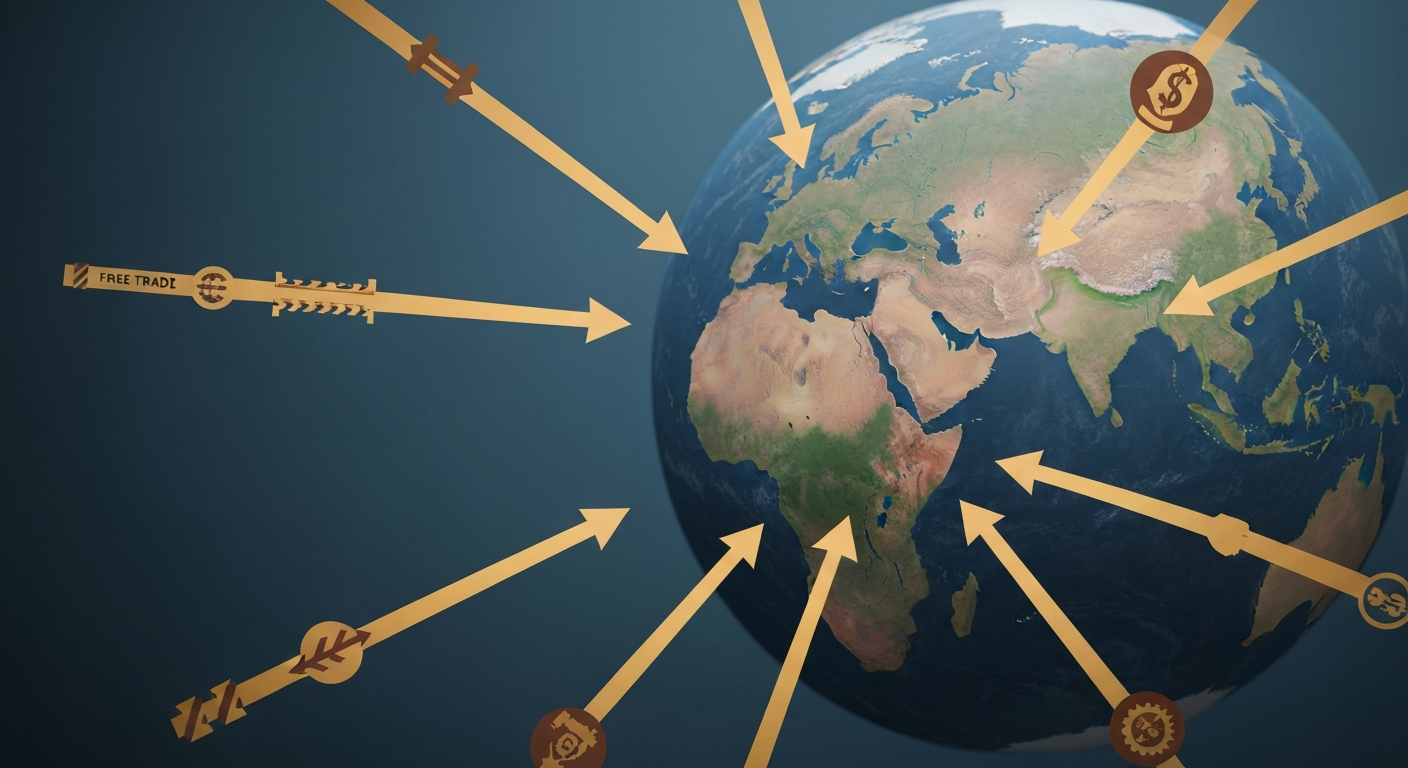
Why Are Tariffs and Trade Wars Part of "Security"?
You might be thinking, "Tariffs? How do those fit into national security?" It’s a great question because it doesn't immediately jump out, does it? But here's the thing: for this administration, economic security is a fundamental pillar of national well-being . The idea is that if other countries, often called "revisionist states" like Russia and China, are taking away American jobs and disrupting the economic lives of its citizens, then that directly threatens national security.
So, in this framework, tariffs aren't just about trade; they're a defensive measure, a tool to protect the income and social security of the American people . It’s a bit of a counterintuitive move, considering free trade is often touted as beneficial, but from this perspective, it's about safeguarding the domestic economy. This leads us to see economic policy and military strategy not as separate entities, but as intertwined elements working towards the same goal: a stronger, more secure America.
What's interesting is how this echoes historical precedents. Think about Nixon's policies, where he similarly used tariffs and even broke the dollar's link to gold to assert American economic independence . Trump, it seems, deeply admires this approach, viewing it as the "only way for America to protect itself" . This historical parallel shows that this isn't a completely new idea, but rather a re-emphasis on a particular school of thought about how nations secure their future, even if it means challenging established norms.
Why Is AI the Ultimate Security Asset?
If economic security is about protecting jobs, then what about the future of those jobs? Here's where AI steps into the spotlight, becoming a crucial component of this security narrative. The argument is that traditional industries like steel, automobiles, and chemicals have largely been ceded to countries like China since the early 2000s, making them uncompetitive due to cost efficiency . So, what's left for America to truly dominate and build a strong economic foundation upon? Technology, and specifically, AI.
This isn't just about being competitive; it's about being unbeatable. The belief is that in cutting-edge fields like AI, the U.S. absolutely cannot afford to lose. It's seen as a strategic imperative, a domain where losing ground to rivals like China is simply not an option. From my experience, many tech leaders share this sentiment, viewing AI as the next frontier for national power and influence, almost like a new space race.
However, here’s a surprising fact that often gets overlooked: even highly advanced tech like AI and semiconductors aren't entirely independent of physical resources . They require rare earth minerals for components, and even the aerospace industry, a key part of this new technological arms race, depends on raw materials for things like optical fiber cables. This reveals a crucial connection: technological dominance, while critical, still needs a strong manufacturing base and access to vital resources. This realization pushes the focus beyond just software and chips to the underlying materials that make them possible.
Is Iran Just a Pawn in a Larger Geopolitical Game?
Now, let's tie this back to seemingly distant conflicts, like the one in Iran. When you understand the deeper strategy of securing resources and establishing manufacturing dominance, these conflicts start to make more sense. The argument is that to become a manufacturing powerhouse once again, and to de-dollarize sales, a weaker dollar is necessary . This leads to a need for real assets, which brings us to the control of resources . And here's where it gets interesting: the U.S. and China have already clashed over critical resources like rare earth minerals in the past, highlighting the strategic importance of controlling these raw materials.
China, for instance, has significantly expanded its lending to developing countries since 2015, especially through initiatives like the Belt and Road Project, which gives them increasing ownership over resource-rich nations . This makes simply "taking on China" a far more complex challenge, underscoring the need for the U.S. to secure its own resource pipeline . This push for resource control explains why countries like Panama, Venezuela, and now Iran become focal points . It's not just about immediate geopolitical squabbles; it's about a long-term strategy to ensure access to essential raw materials.
What might seem like sudden, unpredictable conflicts, like the situation with Iran, have actually been brewing for years, with various strategic moves setting the stage . From Israel's attacks on Hamas leadership and Hezbollah, weakening Iran-aligned forces, to the U.S. military striking Houthi rebels, these actions, many occurring during the Biden administration, consistently reduced the capabilities of pro-Iranian factions . Even a surprising fact like the 2025 airstrike on suspected Iranian nuclear facilities, which went largely unnoticed because it didn't escalate further, indicates a long-game strategy to reshape regional power dynamics . It's all part of a calculated sequence, aimed at creating an environment where a new, more compliant leadership might emerge, ultimately securing valuable resources.
Is "Money Pumping" the Ultimate Goal?
So, if security is the starting point, and it encompasses economic strength, tech dominance, and resource control, where does it all lead? Well, my friends, the ultimate end-game, the "final keyword," if you will, is quite simply: "money pumping" . This isn't just about printing more money in the traditional sense; it's about reinforcing American economic power on a global scale, almost like a complete imperialistic approach covering territory, resources, and currency.
The vision is for a world where the U.S. dollar, amplified by AI platforms and stablecoins, becomes even more indispensable . Imagine AI platforms like Anthropic, which, by the way, I’ve found to be incredibly powerful and efficient, integrated with digital dollars. This creates a system where the digital dollar, though privately issued, functions like a futures currency, complementing the physical dollar . The goal is to dramatically increase the dollar's usage in international transactions, potentially pushing its global utilization from around 90% to an astonishing 95-98%.
This shift means that even countries that might dislike the U.S., like Iran, could find themselves increasingly reliant on the dollar for economic stability, especially during times of crisis when their own currency falters . It’s a fascinating, almost inescapable economic gravity. Think back to the British Empire, where allied nations almost exclusively used the pound sterling, fixing their exchange rates to it, and making London the center for bond issuance . We might be witnessing a similar phenomenon with the digital dollar, where allied nations, perhaps without even fully realizing it, are steadily being integrated into a dollar-centric ecosystem, solidifying American economic dominance . It’s a powerful, subtle path toward continued global influence.