Is China Really Dumping US Treasuries for Gold? The Truth Might Surprise You
There's a lot of chatter out there about China's moves in the global financial arena, especially concerning US Treasuries and gold. The narrative often paints a picture of China aggressively selling off its US debt and secretly hoarding gold, suggesting a weakening dollar and a shift in global power dynamics. But here's the thing: sometimes, what you hear isn't the full story, and the real situation can be far more complex and, frankly, quite counterintuitive. Let's dive deep into this fascinating topic and uncover what's truly going on behind the headlines.
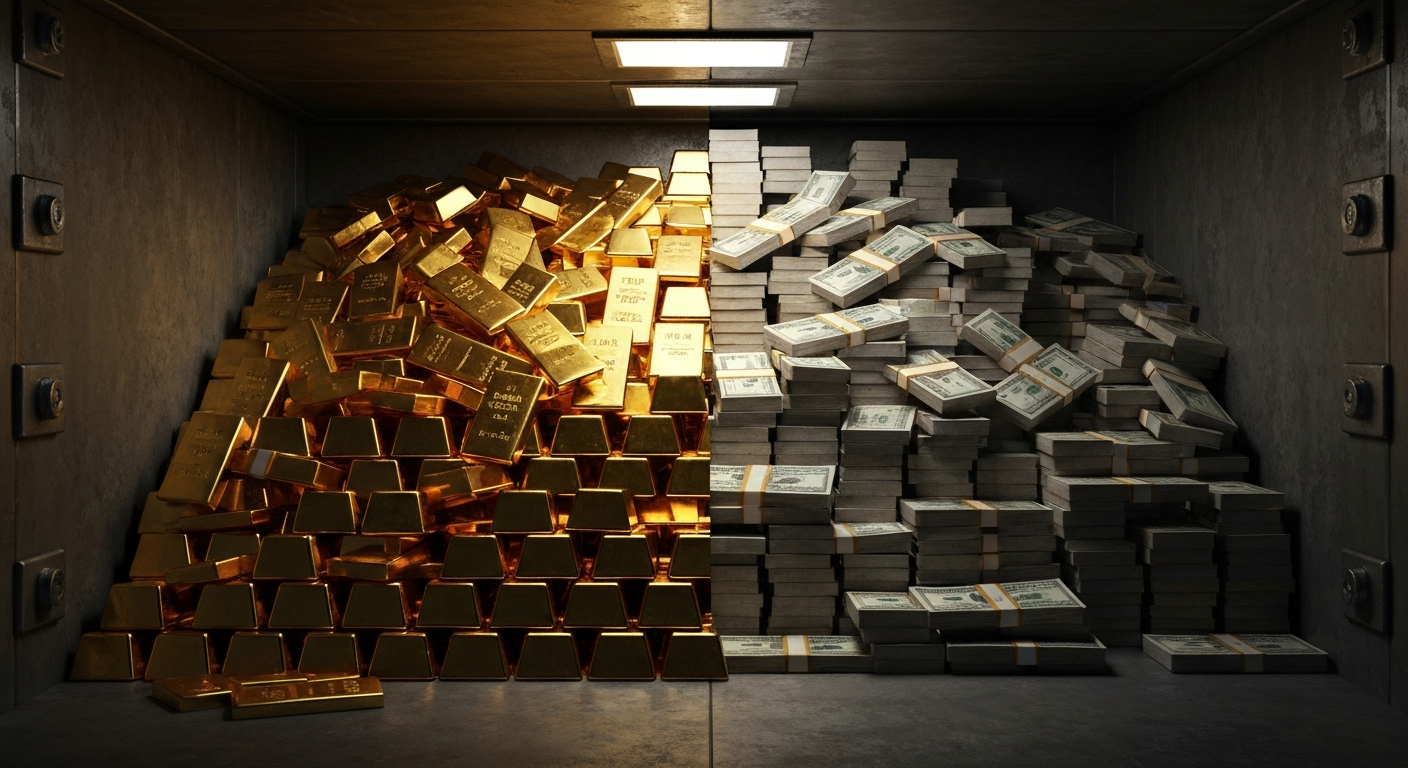
Are Central Banks Really Ditching the Dollar?
You've probably heard the reports: central banks around the world, including China, are supposedly reducing their dollar holdings and diversifying into other assets like gold. It makes sense, right? If countries are holding less dollar-denominated assets, it feels like the dollar's global dominance, or "hegemony," is naturally weakening . This perspective suggests that as demand for the dollar drops, its value should logically follow suit . It’s a compelling argument, one that resonates with many who are looking for signs of a shifting world order.
What's interesting, however, is that while it seems logical, the reality often plays out differently than our initial assumptions. In fact, despite the apparent decrease in dollar holdings within foreign exchange reserves by various central banks, the dollar's value has often strengthened, not weakened . This is a crucial point that many tend to overlook, and it challenges the popular belief that reduced dollar reserves automatically lead to a weaker dollar. It highlights a fundamental misunderstanding of how global currency dynamics truly operate, moving beyond simple supply and demand.
From my experience, it’s easy to get caught up in one specific data point and miss the bigger picture, you know? While it's true that some countries might be incrementally shifting their reserve composition, this doesn't automatically spell doom for the dollar. The global financial system is like a massive, intricate web, and pulling on one string doesn't always yield the expected result in another part. We need to consider all the interconnected factors before drawing firm conclusions about something as significant as a currency's global standing.
Is China Secretly Hoarding Gold While Everyone Watches US Treasuries?
Now, let's talk about China and gold. There's a persistent rumor that China is officially underreporting its gold purchases, actually buying about ten times more gold than it publicly announces . This covert accumulation of gold, it's believed, is part of a broader strategy to move away from dollar dependency and bolster its financial sovereignty . If this were true, it would certainly explain some of the upward pressure we've seen on gold prices lately, suggesting a deliberate and significant shift in China's asset allocation strategy.
Here's the fascinating twist: while China might indeed be buying a lot of gold quietly, they're simultaneously buying US Treasuries, not dumping them, despite popular belief . This might sound completely contradictory, especially when you hear news reports suggesting China is telling its financial institutions to reduce their US Treasury holdings . But think about it: if China was truly selling off its US debt, why would it need to instruct its banks to stop buying them? The very act of issuing such a directive implies they were, in fact, acquiring them.
The sheer volume of China's trade surplus, estimated at around $1.2 to $1.5 trillion annually, means they accumulate an enormous amount of dollars that need to be held somewhere . Since it's challenging to convert such a vast sum into gold without causing a massive price surge and attracting unwanted attention , a significant portion ends up back in US Treasuries, often held indirectly through state-owned banks to obscure the true scale of their purchases . This strategic move allows them to manage their surplus while maintaining a degree of stealth in their financial operations.
Does a Stronger Dollar Mean a Weaker Global Hegemony?
This brings us to a really thought-provoking point: are dollar value and dollar hegemony inversely related? It seems counterintuitive, but a stronger dollar actually works against its global dominance in some ways . The "Triffin Dilemma," a concept proposed decades ago, highlights this exact paradox: for a currency to maintain its international reserve status, the issuing country often needs to run trade deficits to supply the world with enough currency . However, continuously supplying the world with dollars can eventually erode its value and trustworthiness.
Consider this: if the US reduces its trade deficit, meaning fewer dollars are being circulated globally, the dollar becomes more scarce, driving up its value . While a stronger dollar might sound good for Americans buying imported goods, it also makes American exports more expensive, potentially hurting global trade and, in the long run, reducing the world's reliance on the dollar . So, ironically, for the dollar to truly maintain its global sway, it needs to be abundant and relatively inexpensive, which then creates challenges for its value. It's a complex balancing act, and I've found that people often confuse currency value with global influence, when in reality, they can be "antonyms," as one expert cleverly put it . It's a fundamental insight that often gets lost in the noise of daily market news.
Ultimately, the dynamics of global finance are rarely as simple as they appear on the surface. While the headlines might suggest one thing, a deeper look at the data and underlying economic principles often reveals a more nuanced and sometimes completely opposite reality. It’s a continuous lesson in looking beyond the obvious and understanding the intricate dance of cause and effect in the world's financial markets.