Has the World as We Knew It Already Ended?
Sometimes it feels like the world is shifting beneath our feet, and nowhere is that more apparent than when we look at the ongoing Russia-Ukraine war. What started as a conflict many predicted would be over in days or weeks has now dragged on for four brutal years, reshaping global dynamics in ways we couldn't have imagined. It's truly a profound moment in history, making us ask some big questions about where we're headed. From my perspective, this war isn't just a regional conflict; it's a profound signal that the old world order is, frankly, over, and we're just beginning to see the fallout.
Let's dive into some of the major shifts we're witnessing, because, here's the thing, this isn't just about geopolitics; it's about the very fabric of how nations interact and how we perceive concepts like peace and power. The war's longevity has caught many off guard, including experts who initially thought it would be a quick affair . Instead, we've seen a relentless four years, with no clear end in sight, raising fundamental questions about the nature of modern warfare and global stability.
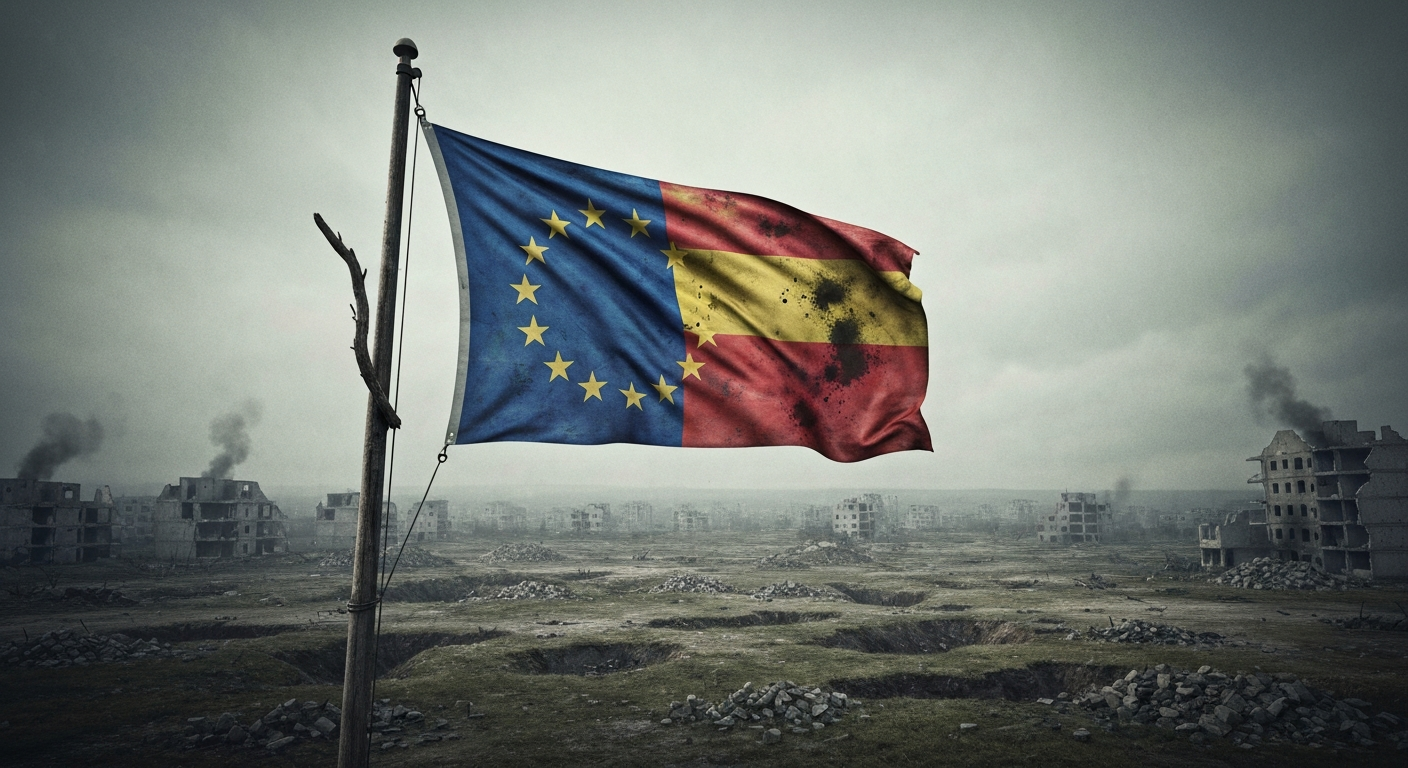
Is the "West" as We Know It Disappearing?
When we talk about global power, we often think of "The West" – a unified bloc of the United States and Europe, right? Well, here's a startling thought: this war, coupled with the shifting political landscape, particularly under leaders like Trump, has pretty much signaled the end of that cohesive "West" as a singular concept . What's interesting is that traditionally, NATO symbolized this unity, but now, it seems like the US and Europe are drifting apart in significant ways, challenging that long-held perception . It's almost like we can't just lump them together as "the West" anymore, especially considering that the US and Russia might not always be adversaries in the future, which is a truly massive shift.
Think about it: back in the day, we relied on Europe for intellectual and moral authority, not just America . Philosophers from Kant to Žižek often hailed from European soil, shaping our understanding of the world . But, what's surprising is that with the Russia-Ukraine war, Europe seems unable to accept Ukraine's defeat as its own, even as Ukrainian citizens suffer immensely, with nearly half the population displaced or dead . This stance, urging Ukraine to "keep fighting" while their own citizens aren't dying, is seen by many, including Professor Lee Moon-young, as a "moral bankruptcy" that deeply challenges Europe's traditional values and image . It really makes you wonder if the Europe we once knew, with its emphasis on humanity and values beyond mere economic prosperity, is slowly fading away.
Is Europe Facing a Moral and Strategic Bankruptcy?
We've just touched on the idea of Europe's moral challenges, but let's dig a little deeper into its potential "fall" – not just morally, but strategically and economically too. This war, at its core, is a confrontation between Russia and Europe, where the US, under certain leadership, seems less inclined to fully participate . With Russia seemingly gaining the upper hand, it suggests a strategic defeat for Europe, which is a pretty stark reality to face . And then there's the economic hit: by shunning Russian gas and imposing sanctions, Europe's economy has arguably taken a harder hit than Russia's, experiencing a slump even before Russia did . This economic downturn is a significant, yet often overlooked, consequence for European nations.
But, I've found that the economic decline, while serious, might be overshadowed by something even more profound: a moral bankruptcy. When we historically thought of the "West's" intellectual and moral authority, Europe often came to mind first, didn't it? Yet, in the context of this war, Europe appears unwilling to accept that Ukraine's defeat is, by extension, their own . This reluctance persists even as Ukrainian citizens endure unimaginable suffering, with a staggering half of the population either killed or displaced . The tragic irony is that Europe continues to push for conflict, prioritizing "not losing to Russia" over the lives and future of Ukrainian citizens, a mindset that fundamentally contradicts the humanitarian values we once associated with the continent . It leads me to believe that the Europe we've long admired, and perhaps even idealized, is no longer the same.
Are We Entering an Era of Nuclear Ambition and Peacelessness?
Now, let's talk about something truly chilling: the growing cynicism towards peace and the unsettling resurgence of nuclear ambitions. It feels like the era where peace was the guiding spirit, especially in Europe after the Cold War, is completely gone . Back then, countries reduced arms, cut military spending, and invested in welfare and environmental policies . But today, the narrative has drastically flipped: it's all about "every man for himself," increasing defense budgets, and stockpiling weapons . What's truly shocking is the talk of reviving conscription and converting car factories into arms manufacturers in Europe, demonstrating a complete turnaround . In this new climate, advocating for peace can actually be met with derision, seen as naive idealism, which is a dangerous shift in the global psyche.
Here's a truly surprising fact: the New START treaty, the last remaining mechanism for controlling strategic nuclear weapons between Russia and the US, expired on February 5th, with no extension . This means there's virtually no formal control over the deployment of nuclear warheads, a terrifying prospect . Even more alarming, countries like Turkey and Germany, a former aggressor in WWII, are openly discussing their nuclear aspirations, and Japan, whose prime minister once received a Nobel Peace Prize for its non-nuclear principles, is now debating whether it's time to abandon those principles . China's nuclear arsenal has even doubled during the Ukraine war, from 300 to 600 warheads, and is projected to reach US and Russian levels by 2030 . This unchecked proliferation and the casual acceptance of nuclear weapons paints a grim picture for our collective future, where the fear of nuclear conflict becomes a normalized reality.
Why Are Casualty Figures So Hard to Grasp, and What Do They Mean?
Let's talk about the human cost, because the casualty figures in this war are both staggering and, frankly, perplexing. We're looking at an estimated 1.8 million to 2 million casualties for both sides combined by spring, with significant disagreement even among experts like CSIS on the exact numbers . What's particularly striking is the sheer scale: in just four years, this conflict has seen more Russian military deaths (around 170,000-220,000) than the Soviet Union experienced in its entire 10-year war in Afghanistan (15,000) . This comparison alone highlights the brutal intensity of the Russia-Ukraine war, marking it as exceptionally fierce and devastating.
Here's another counterintuitive insight that really makes you pause: despite the massive military casualties, the civilian death toll is surprisingly low compared to historical averages. In past major conflicts, like WWII (67% civilian deaths) and the Korean War (74% civilian deaths), civilians made up the vast majority of casualties . Yet, in the Russia-Ukraine war, civilian deaths account for only about 2-4% of total casualties . While every life lost is a tragedy, this remarkably low civilian to military casualty ratio is a unique characteristic of this war, perhaps indicating a deliberate effort by Russia to minimize civilian harm, as they claim Ukraine is a "brotherly nation" . However, it also raises questions about the overall transparency of reporting and the effectiveness of modern warfare tactics. It's a complex picture, one that requires careful analysis long after the fighting stops.
Can the War End When Everyone is So Divided?
So, how does a war end when the parties involved are so fundamentally at odds, both externally and internally? On the negotiation front, Russia has three non-negotiable demands: Ukraine cannot join NATO, its military forces must be reduced, and the occupied territories must be recognized as Russian . The catch? Europe and Ukraine adamantly refuse these terms, creating a diplomatic stalemate . While formal trilateral talks between the US, Russia, and Ukraine have begun this year, they've yielded no progress, suggesting that a diplomatic resolution remains incredibly distant . It really makes you wonder if diplomacy can even work here, or if this conflict is destined to be decided on the battlefield.
But it's not just about the leaders; public opinion plays a crucial, albeit complex, role. In Ukraine, while Zelensky's trust rating remains high at 61% – ironically boosted by Trump's pressure – there's a growing internal divide . A recent poll showed that 40-41% of Ukrainians are now open to ceding occupied territories for peace, a significant shift from the beginning of the war, highlighting the immense toll the conflict has taken on the populace . Meanwhile, in Russia, Putin's war support hovers around 76%, yet a majority (61%) wants the war to end . The surprising part? Despite wanting it to end, 60% of Russians refuse to concede to Ukraine's terms . This contradictory sentiment is partly due to the war's minimal direct impact on the lives of ordinary Russians, especially in cities like Moscow, where most contract soldiers come from rural areas . Until economic hardship truly hits home, which seems to be starting with rising inflation , it seems this internal division will keep any easy resolution at bay.
Ultimately, the Russia-Ukraine war has laid bare the cracks in the global order, challenging our assumptions about power, peace, and morality. The shifts are profound, from the redefinition of "the West" to the concerning rise of nuclear ambitions, and the complex human toll that defies easy categorization. As Professor Lee Moon-young shared, forecasting an end to this conflict is incredibly difficult, with a prolonged, drawn-out struggle appearing to be the most likely scenario . It's a sobering thought, reminding us that the world we once knew might truly be a thing of the past, leaving us to navigate a new, uncertain landscape.