Can the U.S. Really Afford The Iran War, or Is There a Hidden Agenda?
From the Strait of Hormuz to soaring oil prices, it's easy to get caught up in the immediate headlines. But what if I told you there's a deeper current driving a lot of this global instability? You know, the kind of monumental shift that only comes around every few decades. I've found that when you peel back the layers, many of today's conflicts, like the recent tensions involving Iran, aren't just isolated events; they're actually symptoms of a much larger struggle for global dominance, particularly concerning the future of the dollar's supremacy . It's almost as if the world order is undergoing a massive re-evaluation, and the stakes couldn't be higher.
Here's the thing: many experts believe these geopolitical tremors are directly linked to the weakening grip of the U.S. dollar's hegemony . Think about it: the dollar has been losing ground in both financial and industrial sectors for a while now, and this decline is accelerating . What's interesting is how quickly countries like China have grown their economic influence, shifting the global GDP landscape dramatically over the past two decades. For instance, China's share of global GDP shot up from a mere 3.6% in the early 2000s to around 16-17% today, while the U.S. share has slightly dipped . This massive shift inevitably puts pressure on the existing economic order, making the current geopolitical events feel less like random occurrences and more like deliberate attempts to reassert control in a changing world.
So, what does this all mean for us? Well, it suggests that the U.S. is deeply concerned about this erosion of its economic power and feels compelled to act . From my experience, when a dominant power sees its influence wane, there's often a strategic recalibration to shore up its position. This leads us to consider that recent military actions, like those involving the U.S. and Israel targeting Iran, might be less about localized skirmishes and more about a calculated move to defend the "petrodollar" system and slow down the global movement away from dollar-denominated trade, especially as countries like Iran have been increasingly using the Chinese yuan for transactions . It’s a stark reminder that economics and geopolitics are two sides of the same coin, constantly influencing each other in profound ways.
Can the U.S. Really Afford Another War, or Is There a Hidden Agenda?
You might be thinking, "Another conflict? Doesn't that just strain national resources and debt even more?" And you'd be right to ask! Traditionally, military engagements come with a hefty price tag, pushing up government debt and potentially leading to inflationary pressures at home . What's surprising, though, is how some analysts view the U.S. approach to potential inflation in this context. It seems that for certain levels of temporary inflation, the U.S. might actually be willing to tolerate it as a necessary cost for achieving its broader strategic objectives . This counterintuitive stance suggests a calculation that goes beyond immediate economic discomfort, prioritizing long-term power dynamics.
Here's a fascinating historical parallel: in 1940, the U.S. government debt-to-GDP ratio soared to about 120%, largely due to supplying war materials to allies . Yet, this period paradoxically cemented U.S. global dominance, as war-torn European powers, like the UK, were forced to cede economic influence despite winning the war . Fast forward to today, and the U.S. debt-to-GDP ratio is once again at similar elevated levels . This historical context makes you wonder if the current geopolitical actions are, in part, an attempt to leverage a period of high national debt to reassert power, just as it did decades ago . It's not about immediate economic ease, but about securing future leverage.
This brings us to a key question: why now? From my perspective, the current moment might be seen as an optimal window for strategic action before the next U.S. election cycle . Pushing back against challenges to the petrodollar system, like the growing use of the yuan in oil transactions, can be crucial for the U.S. to slow the decline of its financial dominance . It's a gamble, to be sure, but one that seems aimed at maintaining the dollar's role in global trade and finance, particularly by demonstrating consequences for those who opt for alternative currencies in key sectors like oil . Ultimately, the perceived benefits of solidifying the dollar's position, even at the cost of some short-term economic turbulence, appear to be a central driver for these actions.
Is the Petrodollar's Reign Ending, or Just Evolving?
Let's dive into the fascinating history of the petrodollar, because understanding its origins helps us grasp why its future is so critical today. You know, after the Bretton Woods system collapsed in the 1970s, when the U.S. delinked the dollar from gold, there was a major crisis of confidence in the dollar . But then, in a truly pivotal, albeit secret, agreement, the U.S. and Saudi Arabia struck a deal: Saudi Arabia would sell its oil exclusively in dollars, and in return, the U.S. would provide military protection . This ingenious move effectively replaced gold with oil as the backing for the dollar, solidifying its role as the world's primary reserve currency and ensuring massive global demand for U.S. currency for decades to come.
However, things have really started to shift in the 2020s. The proportion of global trade and financial transactions conducted in dollars has been steadily falling, now hovering around 50% . What's even more concerning for the U.S. is that oil-exporting nations are increasingly diversifying their currency holdings, moving away from exclusively dollar-denominated transactions, often favoring the Chinese yuan . This isn't just a minor blip; it directly threatens the petrodollar's structural benefits, like the steady demand for U.S. Treasury bonds that petrodollar surpluses once generated, helping to finance America's trade deficits without major issue.
This brings us to a really surprising insight: while the existing petrodollar system might be eroding, the U.S. isn't just sitting by; it's actively seeking a new foundation for its financial dominance. I've been seeing increasing discussion about stablecoins, which are essentially digital currencies pegged to the U.S. dollar, often backed by U.S. Treasury bonds . Think about it: if these privately-issued stablecoins gain widespread adoption for digital transactions globally, they could effectively create a new, modern "dollar peg" to U.S. debt, boosting demand for U.S. Treasuries and reinforcing confidence in the dollar, even as the traditional petrodollar wanes . It's a clever, almost stealthy way to rebuild demand for the dollar in a digital age, without direct government mandates.
Why Is the Middle East Still Center Stage, and What's China's Play?
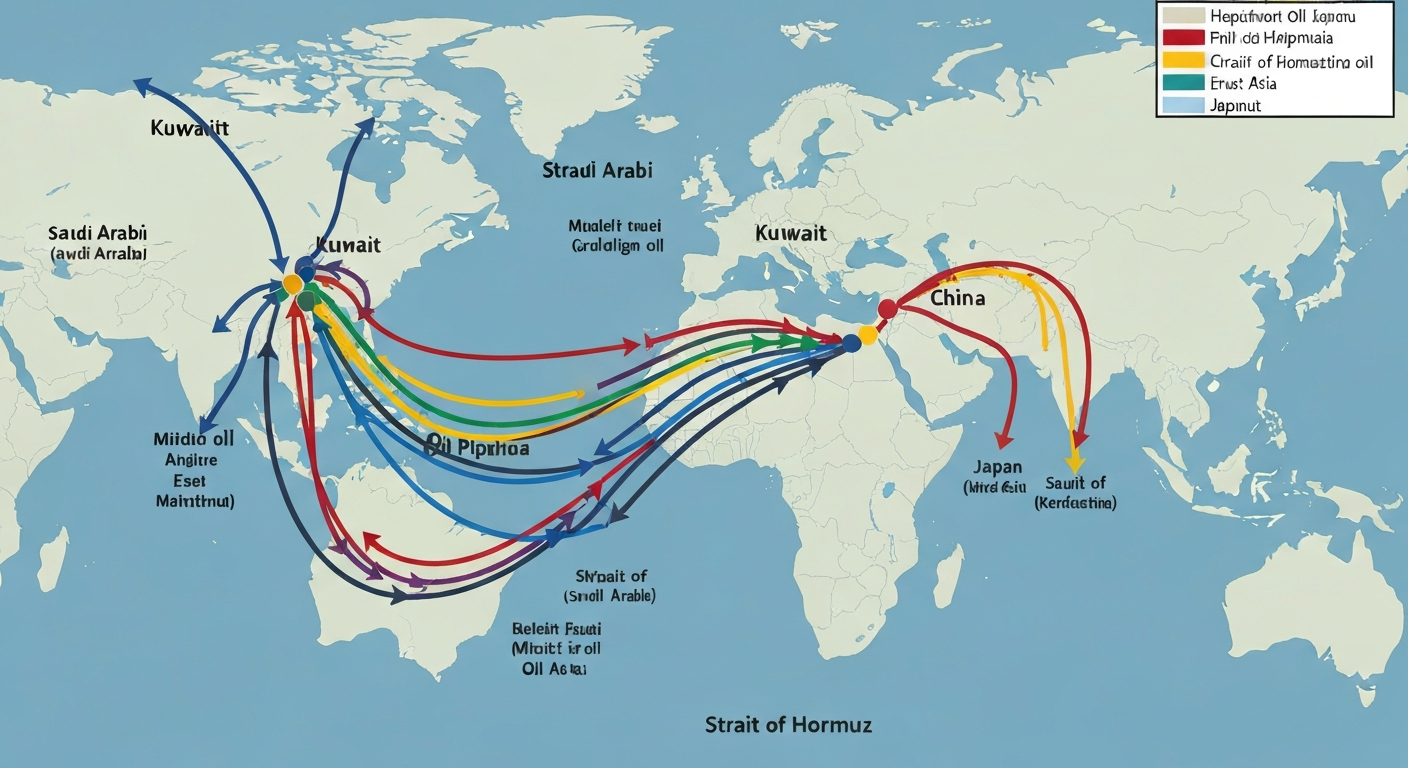
So, with all this talk of shifting global power, why does the Middle East remain such a flashpoint? Well, here's the thing: while the U.S. is a major oil producer itself, the majority of crude oil flowing into Asia still comes from the Middle East, often via the Strait of Hormuz . What's truly critical is that about 90% of Iran's oil exports typically go to China . This means that any disruption in the Strait, or actions against Iran, disproportionately impacts China's energy supply and, by extension, its economic growth . For China, relying heavily on Middle Eastern oil makes it incredibly vulnerable to geopolitical maneuvers in the region.
This situation puts China in a difficult diplomatic spot. On one hand, China has a long-standing agreement with Iran and benefits from its oil exports . Any U.S. action against Iran disrupts this crucial relationship and undermines China's efforts to internationalize the yuan as an alternative trade currency . On the other hand, if China were to heavily support Iran, it risks escalating tensions with the U.S. to a "worst-case scenario" for global markets . This diplomatic tightrope means China must carefully weigh its support for Iran against potential U.S. sanctions and trade pressures, potentially leading to difficult negotiations, perhaps during high-level meetings between leaders.
What's a fascinating, and somewhat surprising, counterintuitive insight is that a prolonged conflict in the Middle East, while immediately disruptive, could actually present some strategic opportunities for China. While the U.S. is bogged down with military expenditures and increased debt, potentially eroding global trust in the dollar, China could quietly strengthen its own infrastructure . We might see accelerated plans for expanding Siberian pipelines and fortifying Central Asian trade routes, reducing its reliance on vulnerable sea lanes . It's a long game, but if the U.S. continues to commit resources to the Middle East, China might seize the chance to build a more resilient energy and trade network, quietly boosting its own economic and geopolitical standing without direct confrontation . It's all about navigating global shifts to gain an advantage in the evolving world order.