We're navigating some pretty choppy waters right now, aren't we? It feels like every day brings a new headline that makes us scratch our heads and wonder what's next for our investments. But instead of just worrying, let's dive in and try to understand the currents shaping our economic landscape. Today, we're going to unpack some fascinating insights about the surprising ways AI, oil prices, and geopolitics are intertwining to create a truly unique and challenging situation for the U.S. economy and monetary policy.
It's easy to get caught up in the daily market fluctuations, but we need to look at the bigger picture. While AI is a fantastic innovation, it's actually complicating economic control and monetary policy in unexpected ways. We're seeing a paradoxical situation where AI-driven inflation is so strong domestically that, despite signs of an impending economic slowdown, the Federal Reserve might actually need to raise interest rates. Talk about being caught between a rock and a hard place!
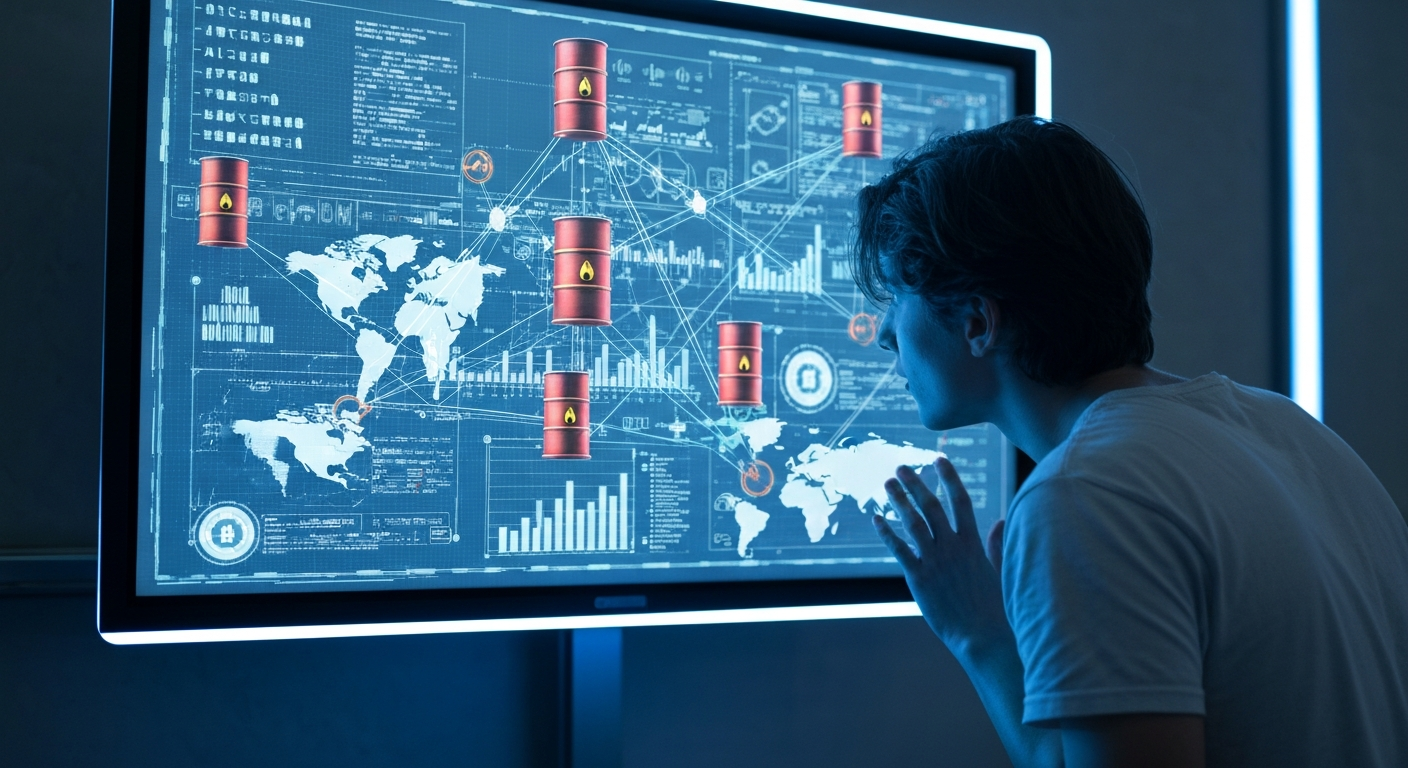
The Unyielding Grip of Oil and Geopolitics
Let's start with the elephant in the room: oil prices. Many of us might think that if oil prices just stabilize, all our inflation worries will disappear. But that's a dangerous oversimplification. The real issue isn't just the price of crude oil, but the severe shortage of refining facilities globally. We've seen 10-20% of these facilities, from the Middle East to other regions, shut down or destroyed. This isn't a new problem; the signs were there early this year, and now we're seeing the full impact.
What this means is that even if crude oil prices drop, the cost of refined products like gasoline and diesel will remain high. In other words, inflation isn't going away anytime soon. Ongoing geopolitical tensions involving Iran and the Houthis as a major driver of this long-term oil supply issue. Iran's oil production and exports have historically plummeted under U.S. administrations that impose strict sanctions, only to recover when more lenient policies are in place. With the current political climate, Iran is strategically leveraging control over crucial shipping lanes like the Strait of Hormuz and the Bab-el-Mandeb Strait. This isn't a short-term tactic; it's a long game, potentially extending through the next U.S. presidential election, as Iran seeks to regain leverage for future nuclear negotiations. The number of transits through these vital straits has already sharply declined, and while there might be temporary openings, the overall trend remains grim. This weaponization of sea lanes is just beginning, and it's a situation that could escalate further, drawing in European nations and other Gulf states into a cycle of retaliation.
This complex web of geopolitical risk is reaching levels not seen since the 1970s oil crises. This isn't just about oil; it's about a fundamental shift in global stability that could lead to prolonged disruptions in refining and oil facilities. We can't afford to be complacent, thinking a temporary dip in WTI prices means the crisis is over. This sustained geopolitical risk, combined with high oil prices, is already signaling an economic downturn. Historically, six out of eight U.S. recessions since the 1970s were preceded by sharp increases in oil price volatility. We're at that precipice again, and this time, AI is adding another layer of complexity.
AI's Unintended Consequences for the Economy
Now, let's talk about AI. While it's undeniably a powerful force for innovation, Current AI investment frenzy is actually making things harder for the U.S. economy. In the past, AI investment might have been a "good seasoning" for growth, but now, it's leading to over-investment in equipment. This creates a strange dilemma: if the economy were to slow down quickly, the Federal Reserve could respond with interest rate cuts to stimulate growth. However, AI's rapid expansion is fueling an "AI-driven electricity inflation" that's keeping domestic inflation stubbornly high.
This means the Fed is in a bind. Even as signs of a recession become clearer, the persistent inflation driven by AI's energy demands makes it difficult to cut rates. In fact, Fed might even be forced to raise rates in the short term, creating a truly paradoxical situation where all the economic paradigms are twisted. This isn't just about the U.S.; the global supply chain is also feeling the pinch. The ongoing geopolitical tensions are exacerbating this, leading to a structural shift where countries are forced into retaliatory actions, further fueling inflation. This makes a diversified portfolio strategy absolutely crucial.
Navigating the Market: Beyond AI and Semiconductors
So, what does this mean for our investments? Market wouldn’t collapse entirely, but anticipate continued volatility, especially in the semiconductor sector. China's consistent strategy of creating oversupply in industries once they show promise, from polysilicon to displays and now electric vehicles. This "supply glut" strategy has historically squeezed out European competitors, allowing China to dominate. The same pattern is now emerging in semiconductors, making it difficult for the sector to thrive despite the AI boom.
This brings us to the crucial question: if not semiconductors, then what? There are two unexpected sectors that are showing promise: cosmetics and chemicals. While cosmetics might seem small compared to AI, the market continues to grow steadily. More interesting is the chemical industry. Unlike semiconductors, China isn't heavily investing in chemicals right now; they're focused on AI and semiconductors. This has led to a supply shortage in the chemical sector, especially as many Chinese chemical companies went bankrupt last year due to a weak macro environment and reduced demand.
Here's the kicker: while global demand for chemical products like spandex and other materials is still alive, the supply from China is constrained. This means that even with relatively cheap raw materials like coal (due to China's weak economy), the selling prices of chemical products are rising, improving profit margins for global chemical companies. Many major chemical firms, particularly those operating globally rather than just in China, saw their first-quarter earnings rebound, with second-quarter results expected to be a surprise. It's ironic, isn't it? We usually associate petrochemicals with a strong economy, but now, a structural shift is making them attractive even amidst economic uncertainty. These companies are trading at P/E ratios of 4-5x, and if the industry continues to turn around, those ratios could drop even further, making them incredibly undervalued.
The Political Wildcard: U.S. Midterm Elections
Finally, let's consider the upcoming U.S. midterm elections. We should be cautious against trusting traditional polling data, as past elections have shown how quickly public sentiment can shift. However, the current situation is quite serious for the Republican party. Historically, former President Trump's appeal stemmed from creating wealth and keeping inflation in check. The current administration, on the other hand, has struggled with inflation, partly due to the Russia-Ukraine war, leading to widespread dissatisfaction.
Current projections suggest a significant lead for the Democratic party, potentially even threatening Republican control of the Senate. Looking at specific races, like the Texas Senate contest, where a Republican incumbent's approval ratings are plummeting due to allegations of misconduct, allowing a Democratic challenger to gain significant ground. This isn't just a party-line battle; it's tied to public perception of Trump's own past actions and the broader sentiment against perceived abuses of power. If this trend continues, the Republican party could face a significant defeat in the midterms.
This political shift has direct implications for AI. While AI is a key component of the U.S.-China tech rivalry, AI companies and hyperscalers would prefer a Republican administration, specifically Trump, to accelerate their growth. If Democrats gain more power in Congress, they might shift focus and funding away from AI and back towards areas like renewable energy subsidies, aligning with their political base. This complex interplay of politics, geopolitics, and AI investment creates an environment of persistent volatility.
It's a lot to take in, isn't it? The insights paint a picture of an economy where traditional rules are being rewritten. The AI investment craze, while exciting, is creating inflationary pressures that complicate monetary policy. Geopolitical tensions are driving up oil prices and disrupting supply chains, signaling a potential recession. And the upcoming U.S. midterms could further shift policy priorities, impacting various sectors. In such an environment, a diversified portfolio that includes sectors like cosmetics and chemicals, alongside a carefully considered approach to growth stocks, seems like a prudent strategy. It's about being prepared for anything, because right now, anything feels possible.